

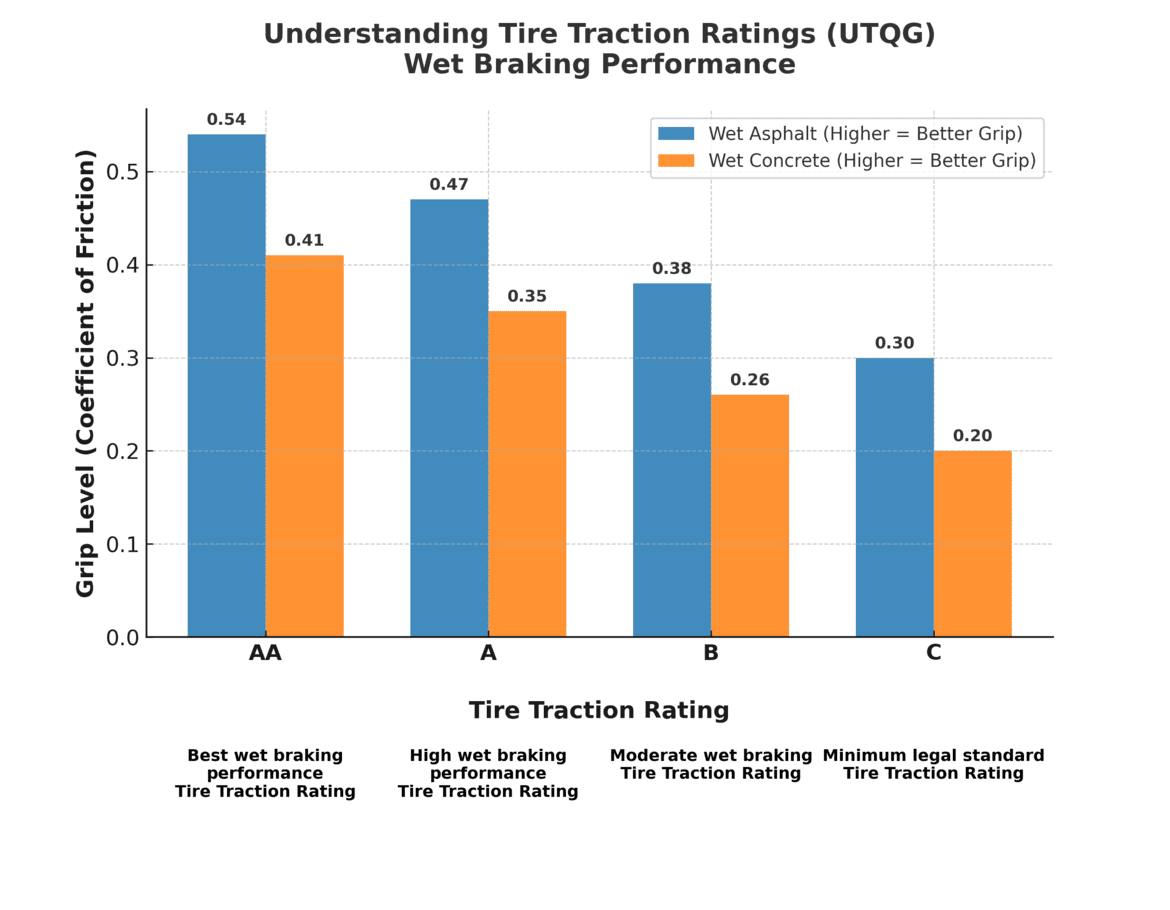
Canada experiences a wide variety of driving conditions—from heavy rain in coastal regions to icy, snow-packed roads in winter. While traction ratings only measure wet pavement braking, they are still an important safety factor.
Here’s why traction ratings are important in Canada:
- Rain and Slush: Wet braking performance can be the difference between stopping safely or rear-ending the vehicle ahead.
- Year-Round Safety: Even if you switch to winter tires seasonally, your all-season or summer passenger tires will see a lot of wet road conditions.
- Emergency Situations: Better traction means better control in sudden stops—something every driver can appreciate.
Traction Rating vs. Other Tire Ratings
While traction rating is important, it’s only one part of a tire’s overall performance profile. The other two UTQG components are:
- Treadwear Rating – Indicates how long a tire is likely to last before wearing out (higher numbers generally mean longer tread life).
- Temperature Rating – Measures the tire’s ability to dissipate heat at high speeds (rated A, B, or C).
For example, a tire might have a UTQG code of 500 A A:
- 500 = Treadwear rating
- A = Traction rating
- A = Temperature rating
When comparing tires, it’s important to look at all three ratings together rather than focusing on traction alone.
The Difference Between Traction Ratings and Real-World Grip
One limitation of the traction rating system is that it only measures straight-line wet braking. Real-world traction also depends on:
- Tread pattern and depth – Aggressive patterns may shed water better, reducing hydroplaning risk.
- Rubber compound – Softer compounds can grip better but may wear faster.
- Tire width – Wider tires can have more contact with the road but may be more prone to hydroplaning.
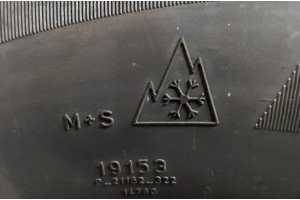
Also, traction ratings don’t apply to winter performance. A tire with an AA wet traction rating may still be unsafe for snow and ice, which is why dedicated winter tires or 3PMSF-rated all-weather tires are recommended for Canadian winters.
How to Choose the Right Traction Rating for Your Needs
1. Urban and Highway Drivers
If most of your driving is on paved roads in moderate to heavy rain areas (e.g., Vancouver, Toronto, Halifax), look for AA or A-rated tires for maximum wet stopping safety.
2. Budget-Conscious Drivers
B-rated tires might cost less, but the trade-off is longer stopping distances on wet roads. If you drive primarily in dry conditions, they may be acceptable—but in wet climates, the safety trade-off may not be worth the savings.
3. Performance Enthusiasts
If you value sporty handling and high-speed stability, AA-rated tires often come with performance-oriented tread designs and softer compounds.
Common Myths About Tire Traction Ratings
Myth 1: A higher traction rating means better performance on ice and snow.
False—traction ratings only measure wet braking, not winter performance. For snow and ice, look for the Three-Peak Mountain Snowflake (3PMSF) symbol.
Myth 2: All AA-rated tires are the same.
Not true—two AA-rated tires can have very different handling characteristics, ride comfort, and noise levels.
Myth 3: Traction ratings never change.
While the official rating stays the same, tire performance can degrade over time as tread wears down.
How to Check Your Tire’s Traction Rating
Look on your tire’s sidewall for the UTQG marking—it will be a combination like 420 A A or 600 B B. The middle letter is the traction rating.
You can also check tire specs online. On TireSet.ca’s passenger tire selection, product listings include UTQG information where available, so you can compare traction ratings before buying.
The Role of Tire Maintenance in Preserving Traction
Even the best-rated tire will lose traction performance if it’s not properly maintained. Here’s how to preserve wet braking performance:
- Maintain proper inflation – Overinflated or underinflated tires reduce the contact patch, lowering grip.
- Rotate tires regularly – Even wear means consistent traction across all four wheels.
- Check tread depth – Replace tires at 4mm tread depth for best wet performance (legal minimum in Canada is 1.6mm, but safety drops long before that).
- Avoid mixing tires with different traction ratings – This can lead to uneven braking and handling.
Matching Traction Ratings to Your Driving Conditions
Example scenarios:
- Rainy coastal BC – AA-rated all-season tires for summer, plus winter tires for cold months.
- Prairie highways – A-rated all-season tires for dry and wet performance, winter tires for snow.
- Ontario commuters – AA or A-rated touring tires for wet braking safety during spring and fall.
Passenger Tire Shopping Tips
When buying passenger tires:
- Always balance traction with treadwear and temperature ratings.
- Don’t assume the most expensive tire has the best traction—check the UTQG rating.
- Consider your local climate and driving style first.
If you’re ready to upgrade, shop passenger tires at TireSet.ca and filter by traction rating to quickly find the best options for your needs.
Final Thoughts
The tire traction rating is an important, yet often overlooked, factor in tire selection. While it doesn’t tell the whole story of a tire’s performance, it provides valuable insight into wet braking capability—a key safety feature for Canadian drivers.
By understanding what AA, A, B, and C ratings mean, how they’re measured, and how they fit into the bigger picture of tire performance, you can make a more informed decision the next time you shop for tires. Pair this knowledge with regular tire maintenance, and you’ll enjoy safer driving in wet conditions year-round.